
We’re thrilled to announce a brand new monthly radio show, Classical Vibes, on Frome FM.
Hosted by our chair (and tuba player) Eleanor, the show is a relaxed, jargon-free way into classical music, whether you’re new to it or a lifelong fan. Each month Eleanor plays music from Frome Symphony Orchestra’s past and upcoming concerts. She tells you a bit about the composers and the stories behind the pieces, and you’ll hear from our players and the people working behind the scenes.
Episode one is out now
With 2026 marking our 25th anniversary, there was only one place to start. The first episode features an interview with Stephen Marquiss, who founded Frome Symphony Orchestra and was its original conductor. Stephen looks back at how it all began and how the orchestra has grown since. The full interview transcript is below…
How to listen
Classical Vibes is on air on the second Wednesday of every month, 4–5pm, on Frome FM:
- 96.6 FM
- Online at frome.fm
- On your smart speaker. Just ask it to play Frome FM.
Missed a show? You’ll find every episode in the Classical Vibes playlist on Mixcloud.
Whether you’re a long-time supporter, a player, or just curious about classical music, tune in, put the kettle on, and enjoy an hour of music from Frome’s very own orchestra.
Interview with Stephen Marquiss Transcript
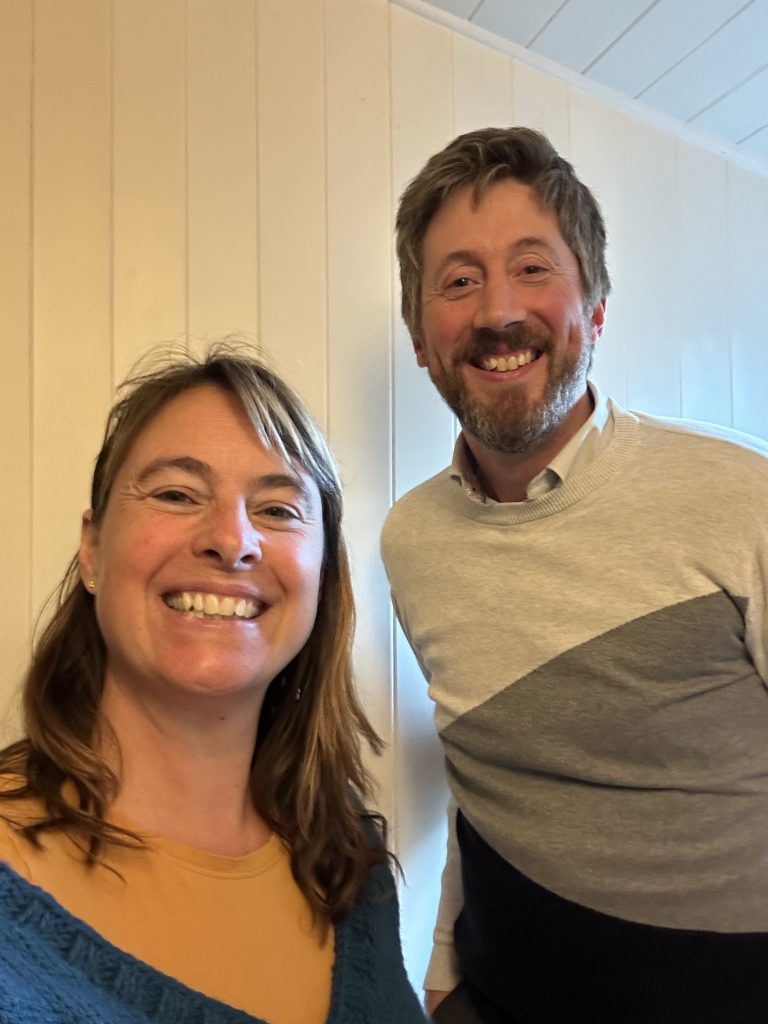
Eleanor: So we’re here to talk about Frome Symphony Orchestra. It’s the 25-year anniversary this year, which is absolutely wonderful. You are the founder of the orchestra.
Stephen: I am.
Eleanor: So I really wanted to just have a chat and understand a little bit about the history of the orchestra, the background, and why on earth does it exist?
Stephen: Well, it’s really, really nice of you to have me. And it certainly has been a trip down memory lane thinking about it.
Eleanor: What made you come up with the idea in the first place that Frome needed an orchestra?
Stephen: So when I was a school student, I used to conduct an old-fashioned church band. It was an orchestral group, a small chamber orchestra that played in church, and it was actually at St Mary’s, Frome. A lovely lady called Mary was instrumental in setting that up, and she very generously had me as a conductor, because I was like 15, 16, 17 at that time. She always used to say it would be great if Frome had a full orchestra again. I went off to university and I hadn’t actually planned to come back to Frome, but for various reasons I did. And I tried to do a few things that were plan B, I suppose, not musical things, just to get some money coming in. But there were things that were tugging at me, and I just thought, well, look, I’m here, I may as well give some of these things a go. And one of those was to set up the orchestra.
Eleanor: But what was the catalyst that made you think, right, now I’m going to create an orchestra?
Stephen: I wanted to create a particular kind of group, a very inclusive group, a group where everybody would feel welcome. Even if there were too many of one instrument, we would try and fit everybody in. I wanted to create a group that was lively and all-age and friendly, and that aimed not just for good-quality performances, but quality music through enjoyment and through camaraderie.
So I just kind of felt like, you know, the stars aligned, I suppose. And that’s what I wanted. So I put my big face in the newspaper and set a date and said, come on this Monday. And about 50 people came, and many were faces that I recognised, and quite a lot of younger people turned up as well. We had a real mixture. I remember looking at the balance of instruments and thinking, oh yeah, we’ve got quite a few strings here, but we also had quite a few of each wind instrument. Like, we had five or six flutes at the beginning. But I did not want to turn anybody away, and that was part of the raison d’être of the orchestra from day one.
Eleanor: How did you decide what music you were going to be playing?
Stephen: I did have an idea, because in Freshers’ Week at uni I signed up to be conductor of the college orchestra, on the basis that I’d conducted this church band in my teens, and they absolutely bit my hand off. I ended up being the main conductor of the college orchestra, with that limited experience, for the next two years. And on the basis of that experience, I did have a few pieces that I’d conducted before, so in my mind I thought, we’re going to start with those.
That was Beethoven’s Symphony No. 1 and Rossini’s The Italian Girl in Algiers, and those were also two of my favourite pieces. I scheduled the first concert to be those two orchestral pieces and some solos. So gradually throughout the term, I asked individuals if they would play a solo piece, or a piece with piano accompaniment, just to sort of pad out the concert a bit and introduce the orchestra. And it worked brilliantly.
Eleanor: And where was the concert?
Stephen: It was in Christ Church, which would be our main home for the nine years that I was there. We did start doing concerts later in the Cheese and Grain, but in the early days we used to pack Christ Church to the rafters, especially for the Christmas events. We had some wonderful individuals.
Eleanor: But hang on a minute. You were quite young when you came up with this crazy idea to form an orchestra, right? You were just out of university.
Stephen: Yeah, so early 20s.
Eleanor: And you’d conducted a church band in your teens. Had you ever done any formal conducting training?
Stephen: No. And I think, looking back, I was more of a general enthusiast and facilitator and motivator than a conductor with good conducting technique. Although, interestingly, Ursula, the professional, always used to say that I did a reasonable job, which was nice of her. But as I said, I conducted the college orchestra. In terms of conducting itself, I was largely self-taught, and it seemed to be fine.
I mean, you try to pick things up all the time, don’t you, from other people, and learn on the job. One thing I probably would have done differently is that I probably inherited from my own experience a slightly condescending attitude. So, you know, as you say, I was young, but I was also probably a little bit arrogant, and, you know…
Eleanor: Let’s say precocious.
Stephen: Well, that’s a good… I think that sums it up, really. Everybody always said that it was such a friendly, welcoming atmosphere, and I’m sure it was, but I probably would have spoken to people with even more respect if I’d gone round again with the experience I have now.
But, you know, it’s not like I was shouting at people or anything. We always tried to get a balance between getting things done… and we did some big repertoire in the old days. I mean, I know it’s huge now.
Eleanor: So what would you say was the most ambitious thing that you did in the orchestra under your batonship?
Stephen: Well, I’ve got lots of favourites. One of the first things we did was form the backbone for the Frome Festival Summer School, and the Frome Festival itself was only a couple of years old at that point. They did Carmina Burana. So that was one of the first things we did, which I thought was quite ambitious, and we contributed to a huge community performance of that in the Cheese and Grain. But flicking through the years, not that long after that, we did Schumann’s Third Symphony, the “Rhenish” Symphony, which I think was still probably one of the best things that we did. I often tried to seek out unusual repertoire, with the hope that it would include everybody. So we did some big symphonies after that. We did Schubert’s “Great”, the Ninth Symphony, as well. We later did Borodin’s Second, which was one of my favourite pieces of all time.
But we also did things like Kalinnikov’s Symphony, and we did some kind of medley of old American tunes. Basically, I used to go to the county music library and just spend ages looking, trying to find unusual and interesting things. So we did a mixture, really.
Eleanor: Putting on a concert and managing an orchestra is not a cheap thing to do. How did you manage financially in those early days?
Stephen: Well, everybody who was able to was happy to pay a sub, so we had a subscription membership. But as soon as we started the working group, people had all sorts of great ideas. One of the things that we did consistently was ask local businesses for sponsorship. For example, one of my favourite events of all was the Valentine Ball, but as you can see on the programme, it was for Frome Carnival Charities Association.
Eleanor: So it’s actually a meal accompanied by a ball, and an orchestra?
Stephen: What I wanted was to conduct with dancers whirling around beside and behind me, and to sort of feel that energy. And we managed to put together quite an interesting programme. We did quite a few Strauss waltzes, and some other interesting things, like Percy Grainger’s English Waltz, for example, and some Schubert waltzes. We did the first half, and then the Terry Hill Big Band, which is a swing band, did the second half of the music.
Eleanor: Wow, that sounds like an amazing evening.
Stephen: It was absolutely brilliant. You can see there’s a photo here of me surrounded by the Carnival Queens as well. Wonderful, wonderful.
Eleanor: It sounds like you had quite a lot of fun with the programming and the events.
Stephen: Yeah, I think we came up with a huge variety of ideas. One of the things I was also really proud of was what started out as the family concert, but became the all-age friendly concert. I actually like things like that, because it harks back to my original vision for the orchestra. Somebody pointed out that it’s inclusive for families, but some people might not want to come because they’re not in a family. And I just thought that’s really great, because we were indicating that we were for children, but also for everybody. So, yeah.
Eleanor: And I think that often with classical music, it can be perceived as being stuffy, and that you have to behave in a certain way. And actually, I think making sure that the music is accessible, and the concerts are accessible to as many people as possible because they’re interesting and fun and different, is really important.
Stephen: I think that was part of the remit from the very outset. So again, one of the early events we did was Frome Symphony’s Christmas Box, and I arranged The Twelve Days of Christmas in quite a humorous way. Tracey, who became the kind of unofficial/official artist for many, many years, designed the most beautiful Christmas cards, with her own drawings for each of the twelve days of Christmas, and we projected those up whilst we played the music. And we did all sorts of other bits and pieces. But then with each successive all-age concert, I think we almost tried to outdo the previous one. When we were in the Cheese and Grain, we were able to do things on a bigger scale. I remember we started one off with the can-can, and I gave out loads of little placards with names and pictures of instruments on, and we had the audience standing up when they saw or heard their instrument play, and then sitting down again. So that was quite funny. And we did Peter and the Wolf as a workshop, and then as part of a concert.
It was a massive team effort.
Eleanor: And there are still, I think, a couple of other members who were original members.
Stephen: Oh, great.
Eleanor: I think it was Maria, Juliet, Suzanne and Jon. They were the four members who were originally there, and still are. And apparently, according to Jon, quite a few people joined not long after the very start who are still in the orchestra.
Were there any kind of real disasters in your tenure?
Stephen: I can’t really think of anything else that went seriously wrong in any way.
I think part of what I’m proud of in terms of what we achieved is that the atmosphere was such that it wasn’t all about the concert performance. You know, the atmosphere in rehearsals and the preparation, the social side, the community side, was as important as the concert performance. So I don’t think I ever remember thinking to myself that anything went particularly wrong in a concert, because everybody just did their best all the time, and that was the point of it, you know. And if we could share something with the community in the form of a final product, then that was almost a bonus.
When you asked me originally what the most ambitious thing we did was, I forgot that later in my tenure, we did Ravel’s Bolero in the same concert as I made my first attempt at playing the Grieg Piano Concerto.
There was a young gentleman called David Hynds, who essentially became associate conductor in my final years. He took over conducting some of the pieces in the concerts, but was also a huge help behind the scenes, and a very, very good trumpet player. He conducted Bolero, and a memorable vision I have of him conducting it is that, to help everybody keep their place, he created this little flip chart of rehearsal numbers. So whenever we got to a particular point in the piece, he’d flip a number down, and everybody was absolutely sure where we were.
Eleanor: You mentioned that David sort of started becoming an associate conductor, and it sounds like maybe you were starting to pull away from the orchestra. How did that process work, and what was it that made you step away from the orchestra in the end?
Stephen: When I hit 29, I had a bit of a eureka moment, and I realised I’d never be happy unless I sorted out my piano playing, and behind a decade of very happy music making in the community, because I didn’t just do Frome Symphony.
I more or less had some kind of mental health crisis in my early 30s. And so, you know, I’m not really proud of how I lost touch with some of the people.
I wanted to make sure that the community projects were passed on to safe hands, and certainly the fact that Mark is still there is testament to the astonishing commitment he’s shown.
If you provide an environment where the music making is always joyful, or that’s the aim… As I said before, I think there were times when I was probably a little bit too snappy or whatever, but on the whole, if the music making is joyful and the atmosphere is convivial, then there’s less of a focus on perfection, on the final outcome, if you like. And you also preserve the most important thing. Frome Symphony was always… I mean, we attracted professionals and semi-professionals as well, but it was always there for amateurs. And of course, you know, the root of “amateur” is “to love”, and that was above all what I sought to establish and preserve. That was the thing I felt was stripped away in my music school days, and that I had to put back in.
I think the ethos of the orchestra was always based in the joy and in the love for music. And even if I and one or two other people didn’t always get that right in terms of one-to-one relationships, or whatever it was, I think we can be really proud that, on the whole, we maintained that at its core.
Eleanor: And I think that Frome Symphony carries that forward now. That sense of community and joy within the room is very much still there.
Stephen: My final concert: Ursula played the Bruch Violin Concerto, and then we did Borodin’s Second Symphony, which is an electrifying piece. Probably my favourite of all the ones that we did.
Eleanor: Nice to finish on one that you loved so much, then.
Stephen: Yeah. Wonderful. That was quite a poignant occasion, because that’s when I first met Mark Gateshill.
Eleanor: You did an amazing job in creating the orchestra, and then it’s evolved, and you let it go off and do its own thing, really. Which is what any parent will do with their baby, right? And now it’s 25 years old.
Stephen: That’s amazing. So what else is happening for the 25th anniversary, then? Is there some good music lined up?
Eleanor: Well, we’ve got some fantastic music. One of the things we’re trying to do as an orchestra, in terms of our programming, is broaden our inclusion. We’re making a concerted effort to include women composers, and Black composers or composers of colour, in our programming. I definitely want to spearhead that, and it feels like a really exciting thing to do.
Stephen: I feel quite emotional listening to that, because I wasn’t aware of just how much music by how many great, great composers I neglected in my music education.
You know, you can’t really have an orchestra that stemmed from a place of love and joy without recognising these fundamental elephants in the room: that orchestral music in the West, for many, many years, neglected composers from certain demographics.
And the fact that you’ve outlined it so eloquently there makes me feel really, really heartened. So thank you for doing that.
Eleanor: It’s very exciting, what we’ll be doing in the next 25 years.
Stephen: Well, it’s exciting for me to hear about that, and it’s just so heartwarming.
Eleanor: Thank you very much for coming and having a really in-depth chat. It’s been wonderful.
Stephen: Well, thank you for having me.
Eleanor: Thank you for having the idea in the first place. And here we are, 25 years later. Happy birthday!
Stephen: Well, and to you.